When the Alarm Sounds: Inside the Mind of a Cyber Security Incident Response Lead
It never starts with a bang.
It starts with a flicker.
A spike in outbound traffic at 02:13 AM.
An endpoint beaconing to an IP address it has never spoken to before.
A privileged account logging in from a geography that makes no sense.
I’ve been doing this for over 20 years. You learn to trust your instincts. You also learn that instinct alone isn’t enough. Discipline wins. Process wins. Evidence wins.
When an incident hits, there is no panic. There is protocol. Cyber Security Incident Response Lead.
The First Five Minutes: Control the Noise
The alert comes in from the SIEM. Severity: High.
Before anyone else moves, I slow the room down.
My first job as Incident Response Lead isn’t technical. It’s psychological. If the team spirals, we lose clarity. If we lose clarity, we lose time. And time is the only thing the attacker needs.
I validate the signal.
- Is this a false positive?
- What telemetry supports it?
- What’s the asset criticality?
- Who owns the system?
I pivot into EDR logs, firewall telemetry, identity provider logs. I look for correlation. If three systems agree something is wrong, we treat it as real.
Within minutes, I classify:
- Confirmed incident
- Suspected compromise
- Malicious but contained activity
If it’s confirmed, we move. Cyber Security Incident Response Lead.
Step One: Containment Without Chaos
Containment is surgical. Not dramatic.
Too many inexperienced responders pull the plug too fast. That destroys evidence and alerts the attacker. If they know we’re onto them, they escalate or detonate.
Instead, I ask:
- Is the adversary interactive?
- Are they moving laterally?
- Do we see command-and-control traffic?
- Are backups accessible from the compromised account?
If lateral movement is active, we isolate endpoints immediately via EDR network containment.
If it’s credential abuse, we disable accounts and revoke active sessions.
If ransomware staging is detected, we block C2 infrastructure at the firewall and cut privilege pathways before encryption begins.
Everything is logged. Every action timestamped.
This isn’t guesswork. It’s choreography. Cyber Security Incident Response Lead.
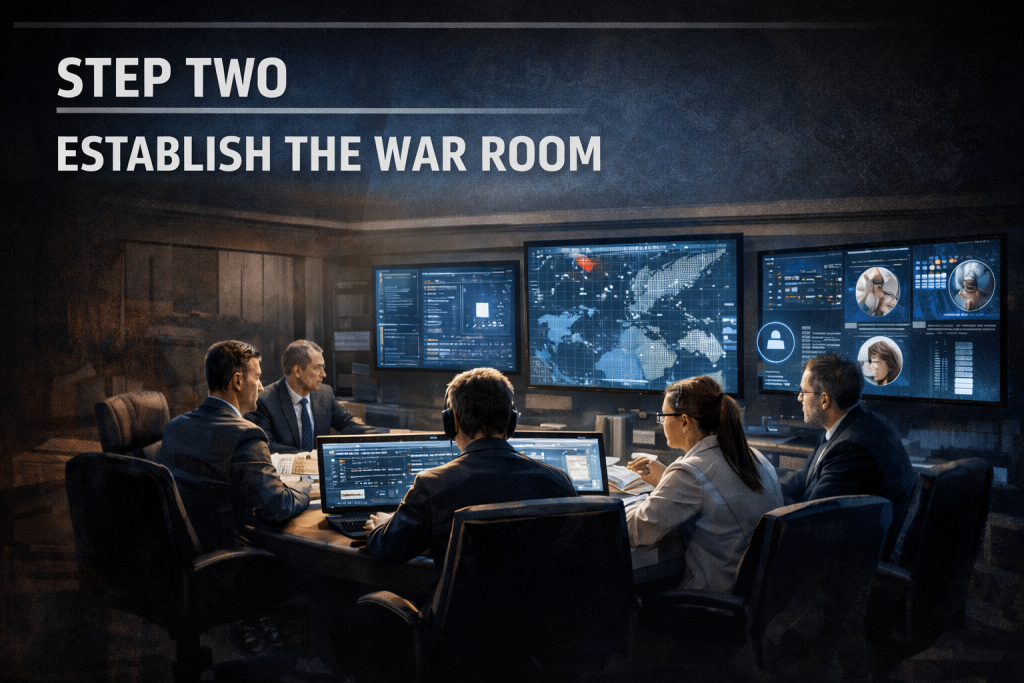
Step Two: Establish the War Room
As Incident Response Lead, I become the central node.
We activate the incident bridge. Legal, executive leadership, IT operations, and sometimes external counsel are brought in depending on severity.
But information flow is controlled.
No speculation.
No emotion.
No unnecessary detail.
I provide structured updates:
- What we know
- What we don’t know
- What we are doing
- What we need
I appoint a scribe. Evidence preservation begins immediately. Chain of custody matters. If this becomes regulatory or criminal, documentation will decide outcomes. Cyber Security Incident Response Lead.
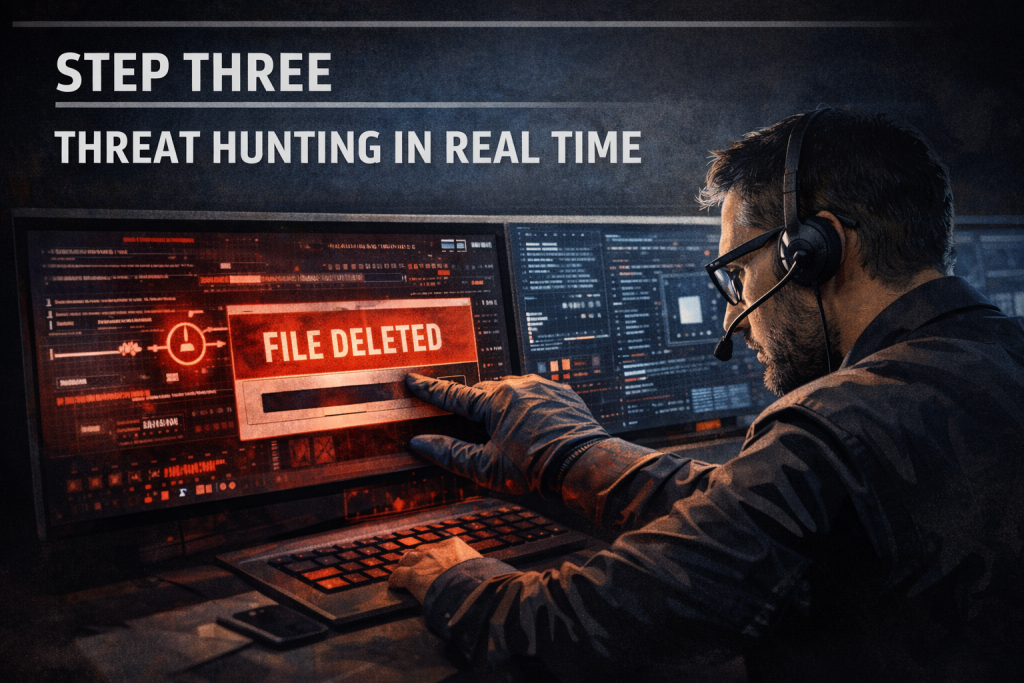
Step Three: Threat Hunting in Real Time
This is where it feels like a crime thriller.
I assume the attacker is already deeper than we think.
We query:
- Suspicious PowerShell executions
- New service creation events
- Unusual Kerberos ticket activity
- LSASS access attempts
- Domain admin group changes
- Abnormal MFA push fatigue patterns
I want the initial access vector.
Phishing?
Unpatched edge device?
Token theft?
VPN credential reuse?
Until I know how they entered, I assume the door is still open.
Indicators of Compromise (IOCs) are extracted and searched enterprise-wide. If I find a hash or IP on one system, I hunt for it everywhere.
This is not reactive work. It’s adversarial thinking.
I think like them.
If I had domain admin at 2 AM, what would I do next?
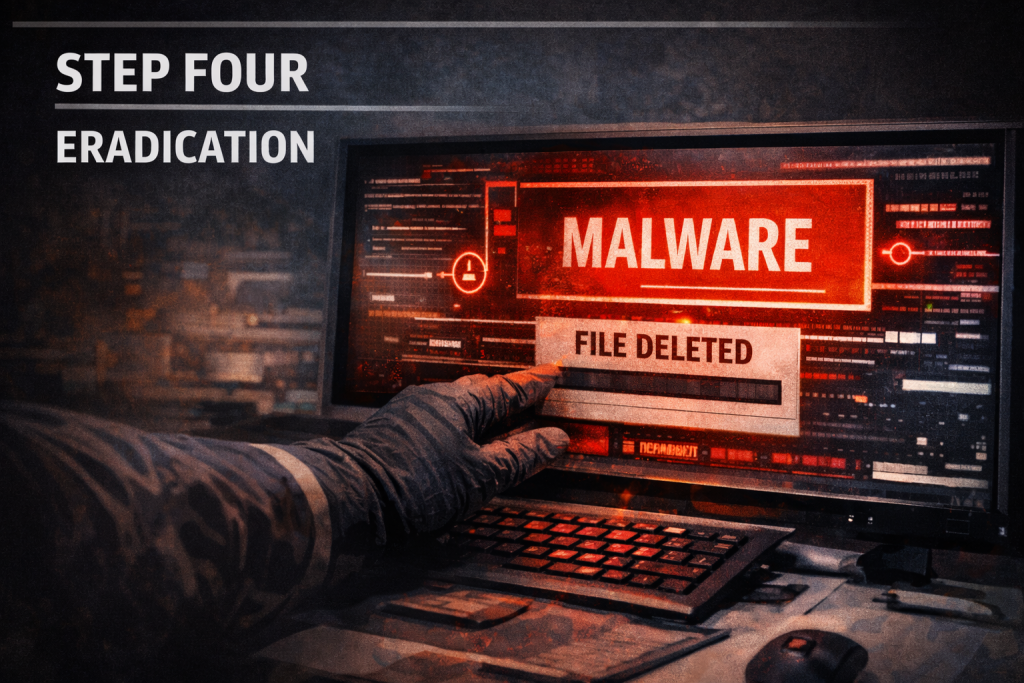
Step Four: Eradication
Only after containment and visibility do we remove.
Malware binaries are quarantined.
Persistence mechanisms are dismantled.
Scheduled tasks deleted.
Registry run keys scrubbed.
Golden tickets invalidated.
Compromised hosts rebuilt, not “cleaned.”
I do not trust a system that has been owned.
Credentials across the environment are reset in tiers:
- Compromised user accounts
- Privileged accounts
- Service accounts
- Domain-level secrets
If the blast radius is large, we execute a full privileged access reset.
Attackers live off identity. Remove identity, remove access.
Step Five: Communication Under Pressure
Executives want answers. Regulators may require notification. Customers may need reassurance.
As Incident Response Lead, I translate technical truth into executive language.
Not fear. Not spin. Facts.
- Was data accessed?
- Was data exfiltrated?
- Are we operational?
- What is the business impact?
I refuse to speculate. I refuse to over-promise.
Credibility during a breach is earned in tone and precision.
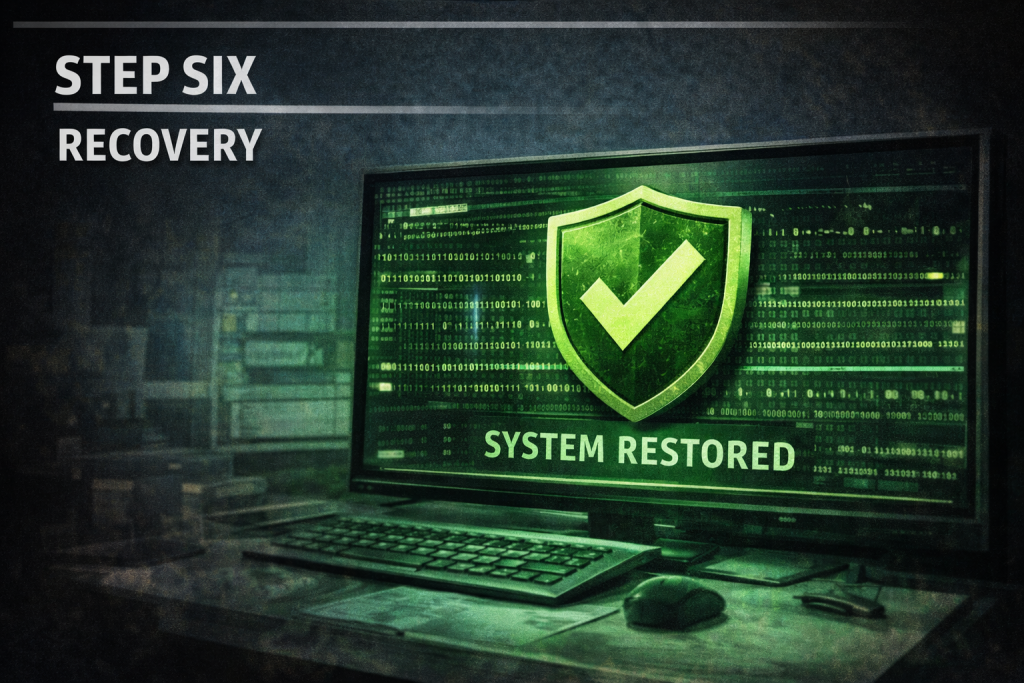
Step Six: Recovery
Recovery is not “systems back online.”
Recovery is confidence restored.
We validate:
- Backups are clean
- Monitoring coverage is intact
- Attack paths are closed
- Patches applied
- MFA enforced everywhere
- Logging gaps addressed
Only when telemetry shows stability do I declare the incident contained.
But we’re not finished.
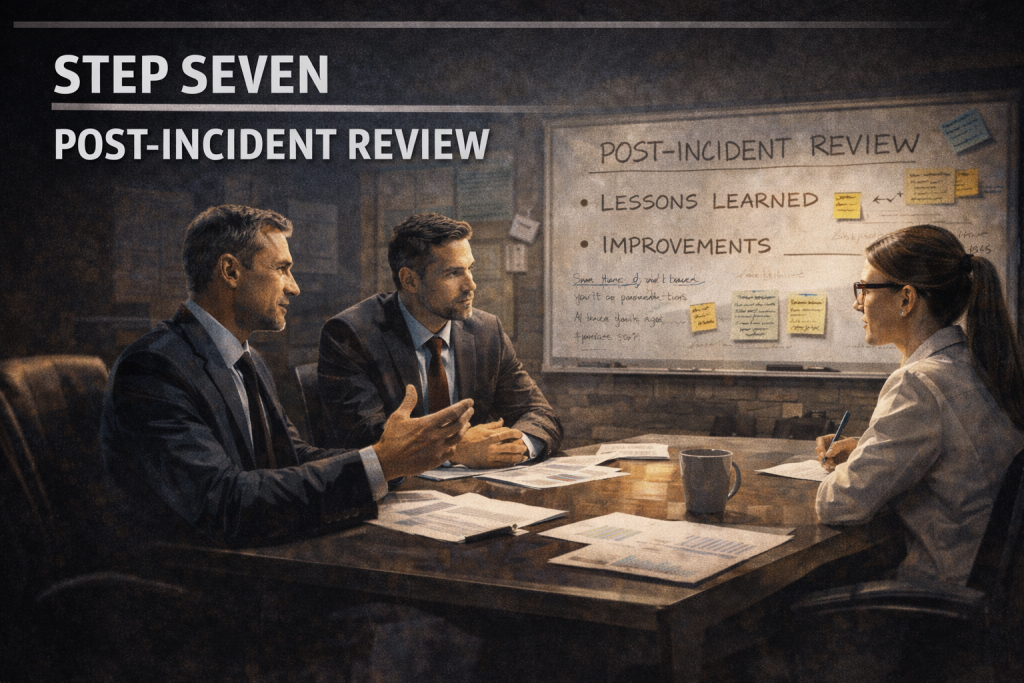
Step Seven: The Post-Incident Review
This is where real leadership shows.
No blame. No ego. No defensiveness.
We conduct a structured after-action review:
- What failed?
- Where did detection lag?
- Was escalation fast enough?
- Did communications flow?
- Were roles clear?
We update playbooks.
We refine detection rules.
We adjust response thresholds.
We train.
An incident is tuition. Expensive tuition.
If you don’t learn from it, you’ll pay twice.
The Everyday Reality
Most days are not breaches.
Most days are preparation.
I review detection coverage.
I test playbooks.
I simulate ransomware.
I run tabletop exercises with executives.
I assess third-party exposure.
I review vulnerability reports with a critical eye.
I assume compromise. Always.
Because incident response is not about reacting. It’s about being ready before the first alert.
The Truth About This Role
When an incident occurs, you are not just leading technology.
You are leading people through uncertainty.
You are making decisions with incomplete information.
You are balancing forensic integrity with business continuity.
You are standing between an adversary and an organisation’s reputation.
And when it’s over, no one applauds.
They simply say, “We’re back online.”
That’s enough.
Because in this work, success is invisible.
And that’s exactly how it should be.
—
If your organisation has never rehearsed a serious cyber incident, you’re already behind.
At Five Eyes Cyber, this is what we do. We prepare for the moment when the alert is real. And when it is, we lead from the front.